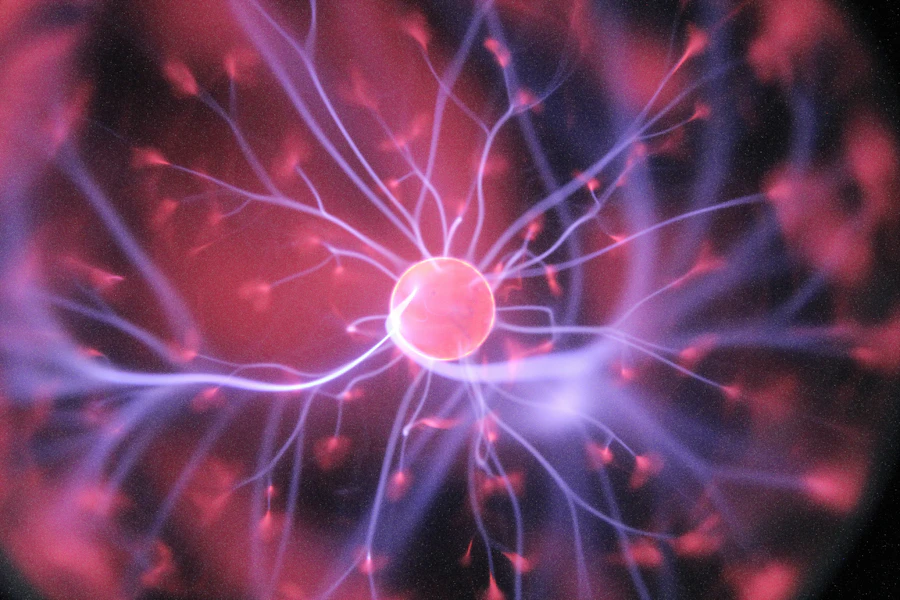
Deep within the center of the brain sits one of the most mysterious and talked-about structures in all of human biology: the pineal gland. This tiny, pine-cone-shaped organ — barely the size of a grain of rice — has fascinated scientists, philosophers, and spiritual seekers alike for thousands of years. To mainstream neuroscience, it is an endocrine gland that produces melatonin and regulates sleep cycles. But to a growing number of researchers, mystics, and independent thinkers, the pineal gland is something far more profound: a biological antenna tuned to realms of consciousness beyond ordinary perception, sometimes called the "third eye."
A History Steeped in Mystery
The reverence for the pineal gland stretches across multiple civilizations and thousands of years. In ancient Egypt, the Eye of Horus — one of the most iconic symbols in all of antiquity — is believed by some researchers to be a stylized cross-section of the human brain, with the pineal gland represented at the center. Egyptian priests and initiates are thought to have possessed deep knowledge of altered states of consciousness, possibly induced by practices that activated this gland.
In Hinduism, the "Ajna" chakra — the third eye chakra — is located precisely where the pineal gland sits within the skull: at the geometric center of the head, slightly above eye level. Hindu traditions describe the third eye as the seat of inner vision, spiritual insight, and connection to higher dimensions of reality. The symbol of the third eye appears across traditions from Buddhism to Taoism to the Freemasons, who use the "All-Seeing Eye" as one of their most significant symbols.
René Descartes, the 17th-century French philosopher and mathematician best known for "I think, therefore I am," called the pineal gland the "seat of the soul." He believed it was the single point in the brain where the immaterial mind and the physical body met and interacted — a hypothesis that was later dismissed by scientific materialism but has never fully disappeared from philosophical discourse.
What the Pineal Gland Actually Does
From a conventional biology standpoint, the pineal gland is an endocrine organ — meaning it produces and secretes hormones directly into the bloodstream. Its primary known function is the production of melatonin, the hormone that regulates the body's sleep-wake cycle (the circadian rhythm). Melatonin production is triggered by darkness and suppressed by light, which is why exposure to screens and artificial light at night disrupts sleep — it signals the pineal gland to hold off on melatonin production.
But what makes the pineal gland unusual — even among conventional biologists — is its structure. Unlike most of the brain, the pineal gland sits outside the blood-brain barrier, meaning it is directly exposed to the bloodstream. It also contains cells called pinealocytes that closely resemble the photoreceptor cells found in the retina of the eye. In some animals, including reptiles and certain fish, a vestigial "parietal eye" on the top of the skull functions as a genuine light-sensing organ connected to the pineal gland. In humans, this light-sensing function has largely been internalized — but the structural similarity to the retinal cells remains.
DMT: The Spirit Molecule
Perhaps the most explosive claim about the pineal gland comes from the work of Dr. Rick Strassman, a clinical associate professor of psychiatry at the University of New Mexico, who conducted the first federally-approved research on psychedelic substances in the United States in the early 1990s. Strassman administered DMT — dimethyltryptamine, a powerful naturally-occurring psychedelic compound — to human volunteers and documented their experiences.
What Strassman found was extraordinary. Volunteers consistently reported encountering "entities" — intelligent beings in other dimensions — experiencing feelings of profound meaning and significance, and undergoing what many described as mystical or near-death-type experiences. Strassman proposed in his book "DMT: The Spirit Molecule" that the pineal gland might produce and secrete DMT under certain conditions — particularly at birth, during death, and in deep meditation or other peak spiritual states.
DMT itself is found naturally throughout the plant and animal kingdoms, and trace amounts have been measured in human blood, urine, and cerebrospinal fluid. Whether the pineal gland synthesizes significant amounts of endogenous DMT in humans remains scientifically unproven but not disproven — it is an active area of inquiry that sits at the boundary of neuroscience, pharmacology, and consciousness studies.
Calcification and the Modern Epidemic of Blocked Third Eyes
One of the more troubling aspects of modern pineal gland research is the phenomenon of calcification. As humans age, calcium phosphate crystals — called "brain sand" or corpora arenacea — deposit in the pineal gland. By the time most adults reach their 40s, a substantial portion of the pineal gland tissue has calcified. This calcification reduces the gland's functional capacity, including its melatonin output.
What causes this calcification? Research points to several factors: fluoride from tap water and toothpaste (fluoride preferentially accumulates in the pineal gland at higher concentrations than in any other soft tissue in the body, as documented in research by Jennifer Luke at the University of Surrey), exposure to heavy metals, pesticide residues, electromagnetic radiation, and poor nutrition. Many researchers in the alternative health community argue that intentional or accidental suppression of pineal function through these environmental exposures is a significant contributor to the epidemic of sleep disorders, depression, spiritual disconnection, and reduced creative thinking in modern society.
Awakening the Third Eye: Practices and Protocols
Whether or not one accepts the more metaphysical claims about the pineal gland, there are well-documented practices that support its health and function. Prioritizing sleep quality and maintaining a consistent sleep schedule supports healthy melatonin production. Minimizing fluoride exposure — by using fluoride-free water filters and toothpaste — may reduce calcification over time, according to some researchers, though mainstream dentistry disputes this. Reducing exposure to blue light from screens in the evening hours preserves natural melatonin cycles.
Beyond these physical interventions, many traditions recommend specific meditative practices to "activate" the third eye. These typically involve focused attention on the center of the forehead just above the eyebrow level, sustained for extended periods of time. Breathwork practices such as pranayama (yogic breathing), sensory deprivation, and certain dietary regimes have all been associated with heightened states of inner perception historically linked to pineal function.
Where Science and Spirit Meet
The pineal gland occupies a fascinating middle ground between the world of measurable biology and the world of inner experience that resists easy measurement. Science can tell us that it produces melatonin, that it calcifies with age, and that its cells resemble photoreceptors. What it cannot yet fully explain is why so many independent cultures across thousands of years of history converged on this tiny structure as the seat of the soul, the third eye, the point of contact between the human and the divine.
Perhaps the most honest position is one of open curiosity. The brain itself — its capacity for consciousness, for subjective experience, for meaning-making — remains one of the deepest unsolved mysteries in all of science. The pineal gland sits at the center of that mystery, quite literally. Whether you approach it as a biologist, a philosopher, or a spiritual seeker, one thing is certain: this small, ancient gland has more to tell us than we have yet been able to hear.


No comments:
Post a Comment